
AC DC Converter: Types, Applications, Benefits and How to Choose the Right One
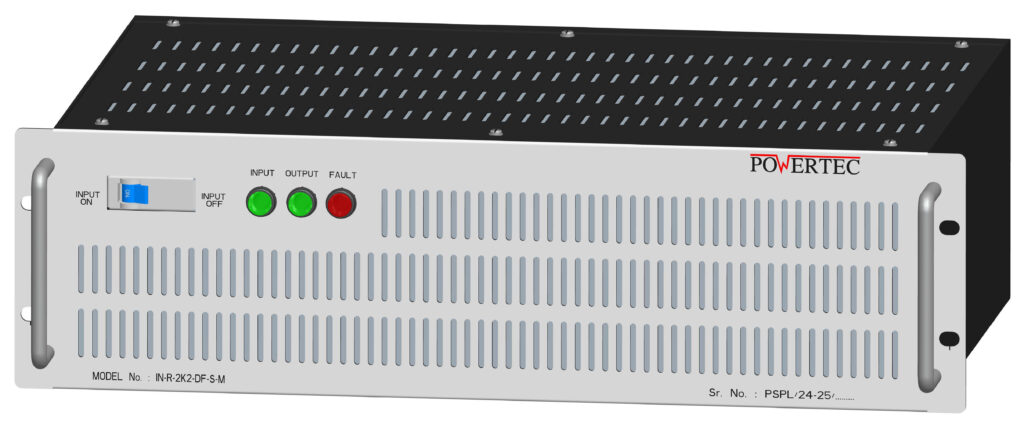
A reliable AC DC converter is an essential part of modern electrical and electronic systems. Industrial equipment, railway systems, medical equipment, defence electronics, automation systems, communication infrastructure and other mission-critical applications often require stable DC power from an AC input source.
An AC DC converter converts alternating current (AC) into direct current (DC), providing the voltage and power required by downstream equipment. Depending on the application, an AC DC converter may provide regulated output power, electrical protection, multiple outputs, redundancy support, remote control and monitoring.
For applications where reliability and continuity are important, selecting the right AC DC converter requires more than simply matching the input and output voltage.
What Is an AC DC Converter?
An AC DC converter is a power electronic device that converts alternating current (AC) into direct current (DC).
Most electrical systems receive AC power from the mains or another AC source, while electronic circuits, controllers, communication equipment, sensors and industrial systems often require DC voltage.
For example, an industrial system may receive 230VAC and require several DC outputs for its control electronics. A suitable AC DC converter can convert the incoming AC power into regulated DC power for these circuits.
AC DC converters are commonly used when:
- AC input needs to be converted into DC power
- A regulated DC output is required
- Multiple DC output voltages are required
- Stable power is required for sensitive electronics
- Protection against electrical faults is required
- Equipment must operate reliably under demanding conditions
- A specialised or application-specific power supply is required
The correct converter depends on factors such as input voltage, output voltage, output current, power rating, efficiency, cooling, protection, environmental conditions and required standards.
How Does an AC DC Converter Work?
An AC DC converter uses power electronic circuits to transform alternating current into controlled direct current.
Depending on the converter design, the process generally involves:
- Receiving AC input power.
- Rectifying the AC waveform.
- Filtering the rectified voltage.
- Switching and regulating the power electronically.
- Controlling the output voltage and current.
- Monitoring operating conditions.
- Protecting the converter and connected equipment against faults.
Modern industrial AC DC converters may also incorporate transient protection, surge protection, over-voltage protection, over-current protection, short-circuit protection and over-temperature protection.
For example, Powertec's industrial portfolio includes an AC/DC converter designed for a 220VDC input and 110VDC 20kW output, with input transient and surge protection and protection against over-voltage, short circuit, over-current and over-temperature.
Types of AC DC Converters
AC DC converters can be designed in different configurations depending on the electrical and application requirements.
1. Single-Output AC DC Converter
A single-output converter provides one primary DC output voltage.
These converters can be used where the complete system requires one main DC voltage.
The selection depends on:
- Input voltage
- Output voltage
- Output current
- Power rating
- Efficiency
- Cooling
- Protection
- Environmental conditions
2. Multi-Output AC DC Converter
A multi-output AC DC converter provides multiple DC voltages from a common AC input.
This can be useful when a system contains different electronic circuits requiring different supply voltages.
Powertec's industrial range includes a quad-output AC-DC power supply with 230VAC input and 5V, +15V, -15V and 28V outputs. The listed features include universal input, surge/lightning/fast-transient protection, remote ON/OFF, convection cooling and over-temperature protection.
3. Rugged AC DC Converter
Rugged AC DC converters are designed for applications where the power system may be exposed to demanding electrical or environmental conditions.
Depending on the specific product, these systems can incorporate:
- Surge protection
- Input transient protection
- Over-voltage protection
- Over-current protection
- Short-circuit protection
- Over-temperature protection
- EMI/EMC protection
- Rugged mechanical construction
Powertec's catalogue includes rugged AC/DC converters for industrial, defence and communication applications with different input/output configurations and protection requirements.
4. Medical AC DC Converter
Medical equipment has specific power requirements because the power supply can form part of a safety-critical system.
Powertec's medical portfolio currently lists AC-DC converters from 15W to 450W, with up to 92.5% conversion efficiency, reinforced 2xMOPP insulation, low leakage current and IEC/EN/ANSI/AAMI 60601-1 medical certification.
When selecting an AC DC converter for medical equipment, engineers should consider the applicable medical safety requirements, insulation, leakage current, EMC performance and complete system architecture.
Why Is the Input Voltage Important?
An AC DC converter should not be selected only by looking at its nominal input voltage.
The actual input conditions may vary depending on:
- Utility supply
- Industrial installation
- Generator source
- Voltage fluctuations
- Transients
- Surge conditions
- Application environment
A converter must therefore have an input range appropriate for the intended installation.
For industrial applications, the required input characteristics can be very different from those of a standard commercial power supply.
Powertec's catalogue includes products with different input architectures, including 230VAC systems, 400VAC three-phase military-oriented systems and specialised industrial AC/DC conversion systems.
AC DC Converter Protection Features
Industrial and mission-critical applications can expose power electronics to electrical disturbances and demanding operating conditions.
Important protection features can include:
- Over-voltage protection
- Over-current protection
- Short-circuit protection
- Over-temperature protection
- Surge protection
- Input transient protection
- Lightning protection
- Reverse-polarity protection where applicable
- Output monitoring
- Fault indication
The exact protection features should always be checked against the individual product specification.
For example, Powertec's industrial AC/DC converter listing specifies protection against over-voltage, short circuit, over-current and over-temperature, together with input transient and surge protection.
AC DC Converter for Industrial Applications
Industrial automation systems require dependable power for controllers, sensors, communication equipment, control panels, instrumentation and other electronic systems.
An industrial AC DC converter should be evaluated according to:
- Input voltage range
- Output voltage
- Output current
- Continuous power
- Efficiency
- Cooling method
- Mounting requirements
- Protection functions
- Environmental conditions
- EMC requirements
- Required certifications or standards
Powertec's industrial solutions include AC/DC power supplies, rugged converters and automatic transfer systems designed for demanding industrial and control-panel applications.
AC DC Converters for Railway Applications
Railway systems can have demanding electrical and environmental requirements. Power conversion equipment may need to operate reliably in systems exposed to transients, vibration, temperature variation and other operating conditions.
Powertec's railway portfolio includes AC-input power systems such as the RA-R-6K0-AF-S-J, specified with a 230VAC input and 48VDC/90A output with N+1 redundancy. The listed features include input transient and surge protection, a multi-PIM cold-swappable configuration and protection against over-voltage, short circuit, over-current and over-temperature.
This type of application demonstrates why railway power systems often require specialised power conversion rather than a generic commercial AC DC power supply.
AC DC Converters for Medical Equipment
Medical electronics require careful consideration of electrical safety, isolation, leakage current, EMC performance and reliability.
Powertec's medical AC-DC range is listed from 15W to 450W, with up to 92.5% conversion efficiency and reinforced 2xMOPP insulation. The company also lists low leakage current and IEC/EN/ANSI/AAMI 60601-1 certification for its medical AC-DC solutions.
Medical equipment can include:
- Patient monitoring systems
- Diagnostic equipment
- Laboratory equipment
- Medical imaging systems
- Surgical equipment
- Hospital electronics
- Healthcare instrumentation
The exact converter should be selected according to the requirements of the final medical system.
AC DC Converter for Defence Applications
Defence electronics can require specialised power conversion because equipment may need to operate under demanding environmental and electrical conditions.
Powertec's catalogue includes rugged AC/DC converters for military applications. One listed product, the MI-T-50K-AG-N, is described with a 400VAC input, multi-output configuration, input transient/surge/burst/lightning protection and protection against over-voltage, short circuit, over-current and over-temperature.
Defence power systems may require consideration of:
- Input transients
- Surge protection
- EMI/EMC
- Thermal management
- Mechanical robustness
- Environmental conditions
- Output configuration
- Monitoring
- System redundancy
The actual requirements depend on the platform and applicable specifications.
AC DC Converter With Multiple Outputs
Some systems require several DC voltages from one AC input.
A multi-output AC DC converter can simplify system architecture by providing several regulated outputs from a common power source.
For example, Powertec's quad-output AC-DC power supply is specified with:
230VAC input
and:
5V +15V -15V 28V outputs
It also lists universal input, surge/lightning/fast-transient protection, remote ON/OFF and convection cooling.
Multi-output power supplies can be useful in systems where control electronics, analogue circuits and other subsystems require different voltage rails.
AC DC Converter vs DC DC Converter
Although both are power-conversion technologies, they serve different purposes.
| Feature | AC DC Converter | DC DC Converter |
|---|---|---|
| Input | AC | DC |
| Output | DC | DC |
| Main purpose | Convert AC to DC | Convert one DC voltage to another |
| Typical input | Mains/AC source | Battery/DC bus |
| Industrial use | Yes | Yes |
| Railway use | Yes | Yes |
| Medical use | Yes | Yes |
| Defence use | Yes | Yes |
| ORing applications | Possible depending on architecture | Common in redundant DC systems |
A system may use both technologies.
For example:
230VAC → AC DC → 48VDC → DC DC → 24VDC
This architecture allows different stages of a power system to receive the voltage they require.
How to Choose the Right AC DC Converter
Before selecting an AC DC converter, engineers should evaluate the following specifications.
1. Input Voltage
Identify the nominal AC input and the complete permitted input range.
2. Output Voltage
The output voltage should match the requirements of the downstream equipment.
3. Output Current
Calculate the maximum continuous load current and include appropriate engineering margin.
4. Power Rating
Determine the required power using:
Power = Voltage × Current
For example, if a DC load requires:
28V × 10A = 280W
the power system must be selected according to the actual operating requirements and appropriate design margin.
5. Efficiency
Higher conversion efficiency can reduce power losses and heat generation.
However, efficiency should always be evaluated together with:
- Load level
- Input voltage
- Temperature
- Cooling method
- System architecture
Do not compare efficiency figures without checking whether the measurement conditions are equivalent.
6. Cooling
AC DC converters can use different cooling methods, including:
- Natural convection
- Forced air
- Conduction cooling
- Liquid cooling
- Application-specific thermal solutions
Powertec's portfolio includes products using different cooling approaches depending on the application.
7. Protection
Industrial applications may require:
- Over-voltage protection
- Over-current protection
- Short-circuit protection
- Over-temperature protection
- Surge protection
- Transient protection
The exact requirements depend on the installation and converter design.
8. Mounting
Consider whether the converter will be installed in:
- Control panels
- Cabinets
- Rack systems
- Industrial equipment
- Embedded systems
- Railway equipment
9. Environmental Conditions
Consider:
- Operating temperature
- Storage temperature
- Humidity
- Altitude
- Vibration
- Electrical transients
- EMC requirements
- Cooling environment
10. Required Standards
For specialised applications, standards and certifications can be critical.
For example, Powertec's railway portfolio lists products associated with IEC 60571, IEC 61373 and IEC 62236-3-2, while its medical AC-DC solutions list IEC/EN/ANSI/AAMI 60601-1 certification.
Always verify the applicable certification for the exact product and application.
Applications of AC DC Converters
AC DC converters are used across a wide range of applications.
Industrial Automation
Powering:
- Controllers
- Sensors
- Control panels
- Instrumentation
- Communication equipment
Railway Systems
Used in:
- Railway power systems
- Signalling
- Control systems
- Communication systems
- Auxiliary equipment
Medical Equipment
Used in:
- Patient-care equipment
- Diagnostic systems
- Medical instruments
- Hospital equipment
Defence Electronics
Used in:
- Mission-critical electronics
- Communication systems
- Control equipment
- Specialised defence platforms
Communication Systems
AC DC power supplies can provide regulated DC power to communication and electronic infrastructure.
Why Choose Powertec Supplies for AC DC Power Conversion?
Powertec Supplies India Pvt. Ltd. provides power conversion solutions for industrial, railway, defence, medical and other critical applications.
Its portfolio includes AC DC converters, DC DC converters, ORing solutions, automatic transfer switches and specialised power systems.
Powertec also works with power-conversion brands including P-DUKE and SynQor, providing access to AC-DC, DC-DC and specialised power-conversion technologies for different applications.
The company states that it provides technical support, design and integration assistance, inventory/logistics support and customised power solutions for specific requirements.
Final Thoughts
Choosing the right AC DC converter requires an engineering evaluation of input voltage, output voltage, current, power, efficiency, cooling, protection, environmental conditions and applicable standards.
From industrial automation and railway systems to medical equipment and defence electronics, the power converter should be selected according to the actual electrical and environmental requirements of the system.
Powertec Supplies provides AC DC power conversion solutions for different applications, including industrial, railway, medical and defence systems.
If you are designing a new system or replacing an existing power supply, evaluate the complete operating requirements before selecting the final AC DC converter.
Looking for an AC DC converter for your application? Contact Powertec Supplies to discuss your input voltage, output voltage, power, cooling, protection and environmental requirements.
Electronics Media — Powertec 50kW AC/DC Rectifier coverage
The Machine Maker — Powertec 50kW AC/DC Rectifier coverage
IPF Online — Powertec 50kW AC/DC Rectifier coverage
Looking for the Right AC DC Converter?
Discuss your input voltage, output voltage, power rating, cooling, protection and environmental requirements with Powertec Supplies.
Contact Powertec Supplies